Skip to product information
1 of 1
Educator Createdorders over $50.00
30-day returnshassle-free
Secure paymentsSSL encrypted
Ships in 3 daysfrom CA
Kindergarten Grade 1 Grade 2 Grade 3-5

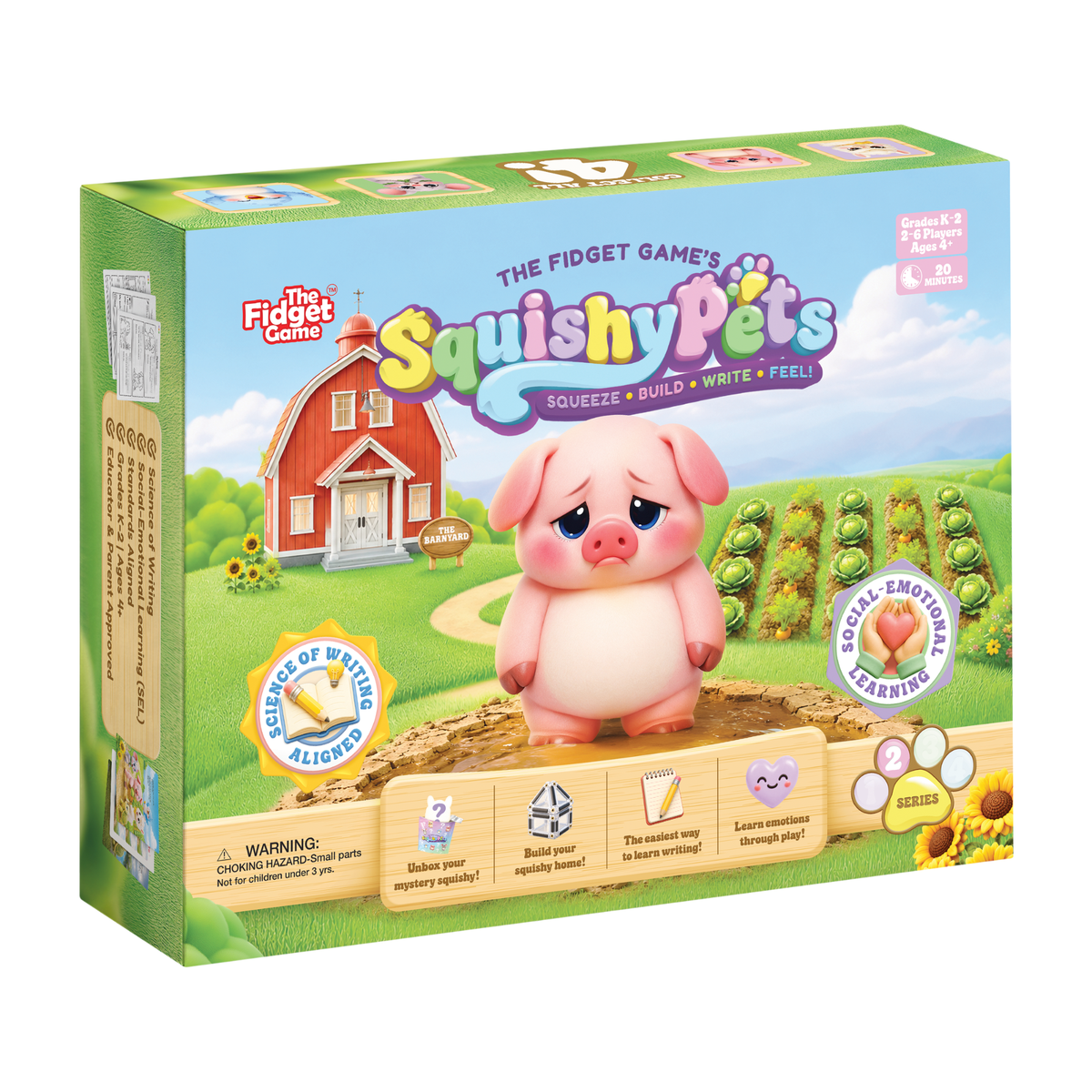
Pablo the Pig! (Squishy Pets 2).

Pablo the Pig! (Squishy Pets 2).

Regular price $72.36
Sale price $72.36 Regular price
Sale Sold out
What's Inside The Box
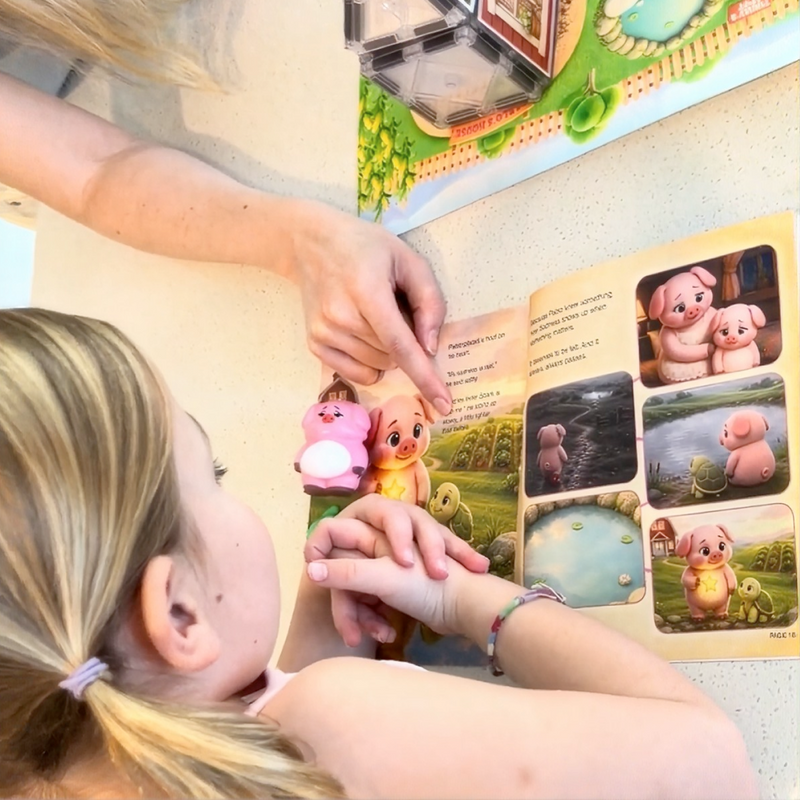
Squishy pet

Squishy pet

Squishy guide pet unboxing surprise

Squishy guide pet unboxing surprise

Workbook

Workbook

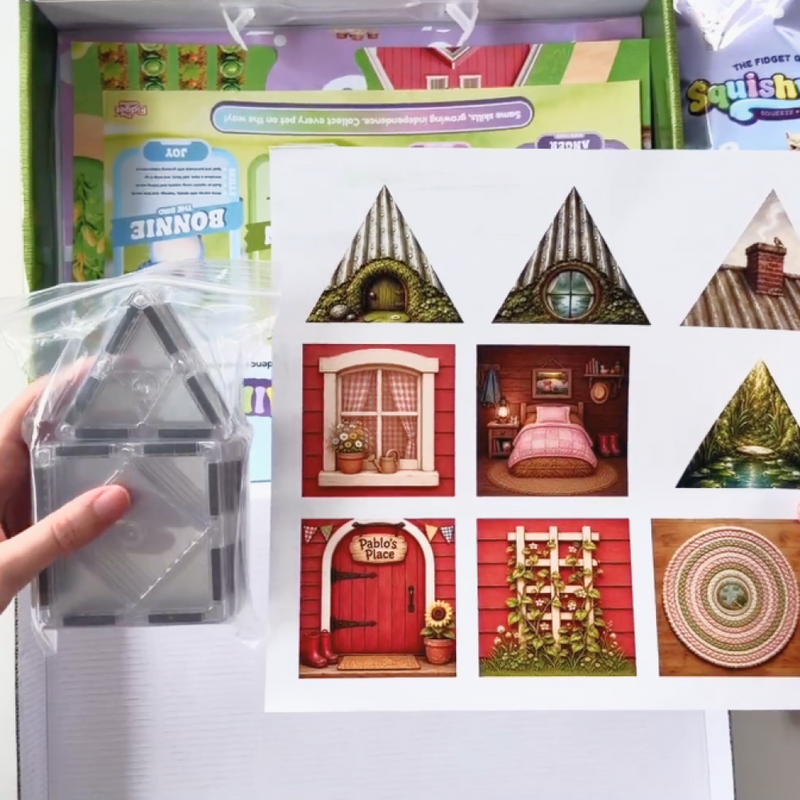
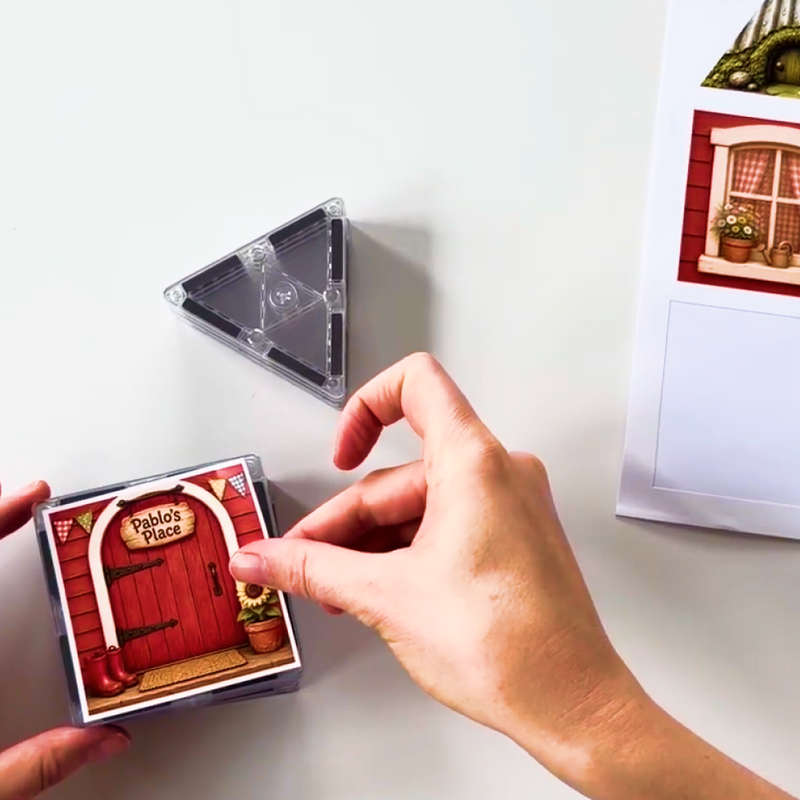
Magnet tiles

Magnet tiles

House map

House map

Squishy keychain

Squishy keychain

Stickers

Stickers

Pet collection card

Pet collection card

Skills Covered After 30 Days
  • Help children understand that sadness is a normal feeling that comes and goes
  • Teach kids to slow down and care for their feelings with the Pig Pause
  • Strengthen story writing, fact sharing, and opinion writing skills
  • Build vocabulary, word work, and handwriting skills
  • Encourage empathy and kindness toward friends who are feeling down
  • Boost confidence in asking for help and sharing feelings with others
Key Features
  • 1-on-1 fun!
  • Ages 4+ (Kindergarten to Grade 3)
Educational Standards
Common Core

Kindergarten

Writing

  • CCSS.ELA-Literacy.W.K.1 Write opinion pieces (drawing/dictating/writing) and state an opinion/preference.
  • CCSS.ELA-Literacy.W.K.2 Write informative/explanatory texts (name topic + supply info).
  • CCSS.ELA-Literacy.W.K.3 Write narratives (single event or loosely linked events, in order, reaction).

Response-writing

  • CCSS.ELA-Literacy.RL.K.2 Retell familiar stories, including key details (with prompting/support).
  • CCSS.ELA-Literacy.RL.K.3 Identify characters, settings, and major events (with prompting/support).
  • CCSS.ELA-Literacy.RL.K.9 Compare/contrast adventures and experiences of characters (with prompting/support).
  • CCSS.ELA-Literacy.W.K.8 Recall/gather information to answer a question (with guidance/support).

Transcription / conventions

  • CCSS.ELA-Literacy.L.K.1.a Print many upper- and lowercase letters.
  • CCSS.ELA-Literacy.L.K.2 Capitalization, punctuation, and spelling (K-level conventions).
  • L.K.2.a Capitalize first word + pronoun “I”
  • L.K.2.b Recognize and name end punctuation
  • L.K.2.c Write letters for most consonant + short-vowel sounds

Grade 1

Writing

  • CCSS.ELA-Literacy.W.1.1 Opinion writing: introduce topic/book, state opinion, give a reason, closure.
  • CCSS.ELA-Literacy.W.1.2 Informative writing: name topic, supply facts, closure.
  • CCSS.ELA-Literacy.W.1.3 Narrative writing: sequenced events, details, temporal words, closure.

Response-writing

  • CCSS.ELA-Literacy.RL.1.2 Retell stories, key details, central message/lesson.
  • CCSS.ELA-Literacy.RL.1.3 Describe characters, settings, major events using key details.
  • CCSS.ELA-Literacy.RL.1.9 Compare/contrast adventures and experiences of characters.
  • CCSS.ELA-Literacy.W.1.8 Recall/gather information to answer a question (with guidance/support).

Transcription / conventions

  • CCSS.ELA-Literacy.L.1.1 Grammar/usage (sentence construction support).
  • L.1.1.a Print all upper- and lowercase letters
  • L.1.1.j Produce/expand simple and compound sentences in response to prompts
  • CCSS.ELA-Literacy.L.1.2 Capitalization, punctuation, spelling.

Grade 2

Writing 

  • CCSS.ELA-Literacy.W.2.1 Opinion writing: reasons + linking words + concluding statement/section.
  • CCSS.ELA-Literacy.W.2.2 Informative writing: introduce topic, facts/definitions, concluding statement/section.
  • CCSS.ELA-Literacy.W.2.3 Narrative writing: well-elaborated event(s), details, temporal words, closure.

Response-writing

  • CCSS.ELA-Literacy.RL.2.2 Recount stories and determine central message/lesson/moral.
  • CCSS.ELA-Literacy.RL.2.9 Compare/contrast two or more versions of the same story.
  • CCSS.ELA-Literacy.W.2.8 Recall/gather information to answer a question.

Transcription / conventions

  • CCSS.ELA-Literacy.L.2.1 Grammar/usage.
  • CCSS.ELA-Literacy.L.2.2 Capitalization, punctuation, spelling.

B.E.S.T. 

Kindergarten 

Communicating Through Writing

  • ELA.K.C.1.1 Print many upper- and lowercase letters.
  • ELA.K.C.1.2 Using a combination of drawing, dictating, and/or writing, create narratives with events in chronological order.
  • ELA.K.C.1.3 Using a combination of drawing, dictating, and/or writing, express opinions about a topic or text with at least one supporting reason.
  • ELA.K.C.1.4 Using a combination of drawing, dictating, and/or writing, provide factual information about a topic.
  • ELA.K.C.1.5 With guidance/support, improve drawing and writing as needed by planning, revising, and editing.

Conventions

  • ELA.K.C.3.1 Follow the rules of standard English grammar, punctuation, capitalization, and spelling appropriate to grade level.

Health

  • HE.K.R.1.1 – Define and give examples of kindness and caring.
  • HE.K.R.1.3 – Describe ways to show respect to others.
  • HE.K.R.2.4 – Identify and recognize basic feelings.
  • HE.K.R.2.5 – Identify personal strengths and actions individuals can do independently.
  • HE.K.R.3.1 – Identify the roles and responsibilities of trusted adults.
  • HE.K.R.4.1 – Identify when help is needed and who to ask for help.
  • HE.K.R.4.2 – Identify the importance of sharing thoughts and ideas to solve problems.

Grade 1

Communicating Through Writing

  • ELA.1.C.1.1 Print all upper- and lowercase letters.
  • ELA.1.C.1.2 Write narratives that retell two or more appropriately sequenced events, including relevant details and a sense of closure.
  • ELA.1.C.1.3 Write opinions about a topic or text with at least one supporting reason from a source and a sense of closure.
  • ELA.1.C.1.4 Write expository texts about a topic, using a source, providing facts and a sense of closure.
  • ELA.1.C.1.5 With guidance/support, improve writing as needed by planning, revising, and editing.

Conventions

  • ELA.1.C.3.1 Follow the rules of standard English grammar, punctuation, capitalization, and spelling appropriate to grade level.

Health

  • HE.1.R.1.2 – Describe the traits of a good friend.
  • HE.1.R.1.5 – Identify strategies to overcome a challenge.
  • HE.1.R.2.4 – Describe how individual actions can affect others.
  • HE.1.R.2.6 – Identify healthy ways to express needs and wants.
  • HE.1.R.4.1 – Identify the importance of working together to solve problems.
  • HE.1.R.4.3 – Understand that conflict may arise when working together.

Grade 2 

Communicating Through Writing

  • ELA.2.C.1.1 Demonstrate legible printing skills.
  • ELA.2.C.1.2 Write personal or fictional narratives using a logical sequence of events, transitions, and an ending.
  • ELA.2.C.1.3 Write opinions about a topic or text with reasons supported by details from a source, use transitions, and provide a conclusion.
  • ELA.2.C.1.4 Write expository texts about a topic, using a source, providing an introduction, facts, transitions, and a conclusion.
  • ELA.2.C.1.5 Improve writing as needed by planning, revising, and editing (with guidance/support + peer feedback).

Conventions

  • ELA.2.C.3.1 Follow the rules of standard English grammar, punctuation, capitalization, and spelling appropriate to grade level.

Health

  • HE.2.R.1.1 – Identify the benefits of showing kindness and treating others with respect.
  • HE.2.R.1.2 – Identify what a conflict is and how disagreements can happen.
  • HE.2.R.2.3 – Demonstrate healthy ways to express needs, wants, and listening skills.
  • HE.2.R.2.4 – Identify personal strengths and areas for improvement.
  • HE.2.R.4.1 – Identify strategies to work together to solve problems.
  • HE.2.R.4.2 – Identify how disagreements can be settled using conflict resolution skills.
TEKS

Kindergarten

Writing process + conventions

  • K.10: Composition—writing process. The student uses the writing process recursively to compose multiple texts that are legible and use appropriate conventions.
  • K.10.A plan by generating ideas (class discussions/drawings).
  • K.10.B develop drafts (oral, pictorial, or written).
  • K.10.C revise by adding details in pictures or words.
  • K.10.D edit drafts (adult assistance) using standard English conventions, including complete sentences and correct spelling of grade-appropriate patterns/high-frequency words.
  • K.10.E share writing.

Genre writing

  • K.11: Composition—genres. Compose meaningful texts.
  • K.11.A dictate/compose literary texts, including personal narratives.
  • K.11.B dictate/compose informational texts.

Response writing

  • K.6: Response skills. Provide oral/pictorial/written responses; retell texts; use evidence (with support).
  • K.6.B provide an oral, pictorial, or written response to a text.
  • K.6.C use text evidence to support an appropriate response.
  • K.6.D retell texts in ways that maintain meaning.

Health

  • *115.12(b)(5)(A) identify and practice behaviors that promote health such as brushing teeth, getting adequate sleep, and managing emotions
  • *115.12(b)(6)(A) identify and describe feelings

Grade 1

Writing process + conventions

  • 1.11: Composition—writing process. Plan, draft, revise, edit, publish/share.
  • 1.11.A plan a first draft (drawing/brainstorming).
  • 1.11.B develop drafts with structure + specific relevant details.
  • 1.11.C revise by adding details in pictures or words.
  • 1.11.D edit drafts using standard English conventions (complete sentences with subject-verb agreement; capitalization/punctuation; spelling of grade-appropriate patterns and high-frequency words with adult assistance, etc.).
  • 1.11.E publish and share writing.

Genre writing 

  • 1.12: Composition—genres.
  • 1.12.A dictate/compose literary texts, including personal narratives and poetry.
  • 1.12.B dictate/compose informational texts, including procedural texts.

Response writing

  • 1.7: Response skills.
  • 1.7.B write brief comments on literary or informational texts.
  • 1.7.C use text evidence to support an appropriate response.
  • 1.7.D retell texts in ways that maintain meaning.

Health

  • 115.13(b)(6)(A) identify and describe a variety of emotions
  • 115.13(b)(6)(B) identify calming techniques such as breathing slowly that can be used to manage strong emotions
  • 115.13(b)(8)(A) identify and practice strategies for managing strong emotions
  • 115.13(b)(9)(A) demonstrate communication skills such as eye contact, attentive listening, and taking turns talking

Grade 2

Writing process + conventions 

  • 2.11: Composition—writing process. Plan, draft, revise, edit, publish/share.
  • 2.11.A plan a first draft (drawing/brainstorming).
  • 2.11.B develop drafts with structure + specific relevant details.
  • 2.11.C revise by adding, deleting, or rearranging words/phrases/sentences.
  • 2.11.D edit drafts using standard English conventions (sentence agreement; verb tense; punctuation; commas; contractions; spelling grade-appropriate patterns/high-frequency words, etc.).
  • 2.11.E publish and share writing.

Genre writing

  • 2.12: Composition—genres.
  • 2.12.A compose literary texts, including personal narratives and poetry.
  • 2.12.B compose informational texts, including procedural texts and reports.
  • 2.12.C compose correspondence (thank you notes/letters).

Response writing 

  • 2.7: Response skills.
  • 2.7.B write brief comments that demonstrate understanding.
  • 2.7.C use text evidence to support an appropriate response.
  • 2.7.D retell and paraphrase texts maintaining meaning and logical order.

Health

  • 115.14(b)(6)(A) identify a variety of emotions and how they affect behavior
  • 115.14(b)(6)(B) demonstrate strategies for managing emotions such as anger, sadness, and happiness
  • 115.14(b)(8)(A) identify characteristics of effective communication such as listening, making eye contact, and taking turns talking
  • 115.14(b)(9)(A) demonstrate strategies for resolving conflict
CASEL SEL Framework

Self-Awareness

  • Identifying Emotions — Recognizing and naming one's emotions including anger, hurt, and sadness; identifying physical sensations associated with emotions (PreK-K, Grades 1-2)
  • Recognizing Strengths — Understanding that all feelings belong and are part of oneself; recognizing the protective function of emotions (Grades 1-2)
  • Self-Confidence — Developing positive self-concept by understanding that having anger doesn't make one "bad" (Grades 1-2)

Self-Management

  • Impulse Control — Managing the urge to react immediately by pausing and breathing (PreK-K, Grades 1-2)
  • Self-Discipline — Making intentional choices about behavior after acknowledging feelings; being "in charge" of responses (Grades 1-2)
  • Stress Management — Using calming strategies including breathing, placing hand on heart, and self-talk to regulate emotional arousal (PreK-K, Grades 1-2)
  • Expressing Emotions — Communicating with emotions through thanking and acknowledging them rather than suppressing or acting out (Grades 1-2)

Social Awareness

  • Perspective-Taking — Understanding emotions from a new perspective (Grades 1-2)

Relationship Skills

  • Communication — Using words and self-expression to address feelings and needs rather than physical reactions (Grades 1-2)
  • Social Engagement — Receiving support and guidance from others when experiencing difficult emotions (PreK-K, Grades 1-2)

Responsible Decision-Making

  • Identifying Problems — Recognizing when feelings arise and what triggers it (Grades 1-2)
  • Analyzing Situations — Understanding the sequence of emotion, physical response, and behavioral choice (Grades 1-2)
  • Evaluating Consequences — Recognizing that immediate reactions have different outcomes than calm, kind choices (Grades 1-2)
  • Reflecting — Pausing to listen to emotions and choose responses intentionally (Grades 1-2)
Our games are used in 50,000+ classroomsSpecial discounts for school districts and homeschoolers. Get a Quote
View full details
30-Day Money Back Guarantee
How to Play

How to play Pablo the Pig! (Squishy Pets 2).

* Results based on internal study with regular users. Individual results may vary.

You ask, we answer!

What is the return policy?

We offer a 30-day return policy for eligible items.